Whale Watching Dominican Republic: Complete 2027 Guide
Whale watching in the Dominican Republic is one of the best wildlife experiences in the Caribbean. Every year, humpback whales return to the warm waters around Samaná Bay, creating an unforgettable opportunity to see these enormous marine mammals in their natural environment.
If you are planning a trip to the Dominican Republic in 2027 and want to see humpback whales, this complete guide explains when whale watching season starts, where to go, the best months, how tours work, whale watching from Punta Cana, Samaná whale watching tours, what you can expect to see, responsible whale watching rules and how to choose a tour.
Quick Answer: Where Is the Best Whale Watching in the Dominican Republic?
The best-known whale watching destination in the Dominican Republic is Samaná Bay, on the country's northeastern coast.
Humpback whales return to the region every year during the winter months, generally from January through March, to mate, give birth and care for their calves.
The International Whaling Commission identifies Samaná Bay as a major whale-watching destination and notes that whale watching in the Dominican Republic was established in Samaná in 1985.
For most travelers, the best places to organize a whale watching excursion are:
- Samaná
- Las Galeras
- Las Terrenas
- Sabana de la Mar
- Las Cañitas
- Miches
- Punta Cana, with transportation to the Samaná whale-watching area
If you are staying in Punta Cana, the whales are not normally watched directly from the Punta Cana coastline. Instead, a full-day excursion takes you to the Samaná region, where the whale-watching portion of the trip takes place.
When Is Whale Watching Season in the Dominican Republic?
The main whale watching season in the Dominican Republic is January through March.
During these months, humpback whales migrate from northern feeding grounds to the warm Caribbean waters around the Dominican Republic.
The International Whaling Commission identifies the Samaná Bay whale season as occurring between January and March, when humpback whales arrive to mate and give birth.
Dominican Republic Whale Watching Season
MonthWhale WatchingWhat to ExpectJanuaryExcellentBeginning of the main seasonFebruaryExcellentOne of the best monthsMarchExcellentStrong whale activity before migrationAprilLimited/Normally finishedMost whales have migrated northMay–DecemberNo regular Samaná whale seasonNot the normal season
What Is the Best Month for Whale Watching?
February is an excellent choice for whale watching in the Dominican Republic.
January and March can also provide spectacular encounters. Because whales are wild animals, however, sightings and behavior can never be guaranteed on a particular day.
Instead of promising a specific number of whales, responsible operators should explain that every trip is a wildlife experience and that conditions can change depending on weather, sea conditions and whale behavior.
Why Do Humpback Whales Come to the Dominican Republic?
Humpback whales undertake one of the longest migrations in the animal kingdom.
They spend much of the year feeding in colder northern waters and migrate south to warmer tropical and subtropical waters during the breeding season.
Samaná Bay provides important habitat where humpback whales can:
- Mate
- Give birth
- Nurse calves
- Socialize
- Rest
- Prepare for their migration back north
The warm waters are especially important for newborn calves because they provide a very different environment from the cold feeding grounds where the adults spend much of the year.
Where Can You See Whales in the Dominican Republic?
1. Samaná Bay
Samaná Bay is the country's most famous whale watching destination.
The town of Santa Bárbara de Samaná has become a major starting point for whale watching excursions.
From Samaná, boats travel into the bay and surrounding marine sanctuary waters during the whale season.
The International Whaling Commission describes Samaná as a whale-watching hub in the Dominican Republic and notes that humpback whales visit the area between January and March.
Best for: travelers staying in Samaná, Las Terrenas, Las Galeras and nearby areas.
2. Punta Cana
Many travelers search for whale watching Punta Cana because Punta Cana is one of the Dominican Republic's largest tourism destinations.
However, the main humpback whale-watching area is Samaná Bay.
A whale-watching excursion from Punta Cana normally involves:
- Early hotel pickup
- Transportation toward the Samaná region
- Arrival at the departure point
- Boat excursion
- Humpback whale watching
- Optional Cayo Levantado or another attraction
- Lunch depending on the package
- Return transportation to Punta Cana
This makes Punta Cana whale watching a full-day excursion, rather than a short activity directly from the resort area.
3. Sabana de la Mar
Sabana de la Mar is another important access point in the eastern Dominican Republic.
Its location near the western side of Samaná Bay makes it particularly interesting for travelers staying in the eastern part of the country.
It can also be convenient for visitors combining whale watching with Los Haitises, Caño Hondo and other nature experiences.
The Dominican Ministry of Environment's 2027 authorization process specifically includes operators and boat owners from Samaná, Las Galeras, Miches, Sabana de la Mar and Las Cañitas.
4. Las Galeras
Las Galeras is located at the eastern end of the Samaná Peninsula and provides another starting point for whale-watching excursions.
It is particularly attractive for travelers who want to combine whale watching with beaches, snorkeling, hiking and other nature experiences.
5. Miches and Las Cañitas
Miches and Las Cañitas are increasingly important tourism destinations in eastern Dominican Republic.
The official 2027 environmental authorization process specifically includes these locations, demonstrating their role in regulated whale-watching operations.
Whale Watching from Punta Cana in 2027
If you are staying at a hotel in Punta Cana, you can still experience Dominican Republic whale watching.
The important thing to understand is that Punta Cana and Samaná are different destinations.
The whale-watching excursion takes you from the Punta Cana resort area toward the Samaná region.
Because of the distance, this is normally a long day.
Is Whale Watching from Punta Cana Worth It?
For travelers who have always wanted to see humpback whales, it can be an excellent day trip.
It is especially worthwhile if:
- You are visiting the Dominican Republic during January, February or March.
- You do not plan to stay overnight in Samaná.
- You want to combine whale watching with another Dominican Republic attraction.
- You enjoy wildlife and nature.
- You are comfortable with an early departure and a long excursion day.
If your vacation already includes several days in Samaná, staying closer to the bay can provide a more relaxed whale-watching experience.
What Can You See on a Whale Watching Tour?
Every whale-watching trip is different.
Humpback whales are wild animals, so their behavior cannot be controlled.
Depending on the day, you may see:
- Humpback whales surfacing
- Tail flukes
- Breaching
- Pectoral fins
- Tail slapping
- Mothers traveling with calves
- Groups of whales
- Courtship behavior
- Whales resting at the surface
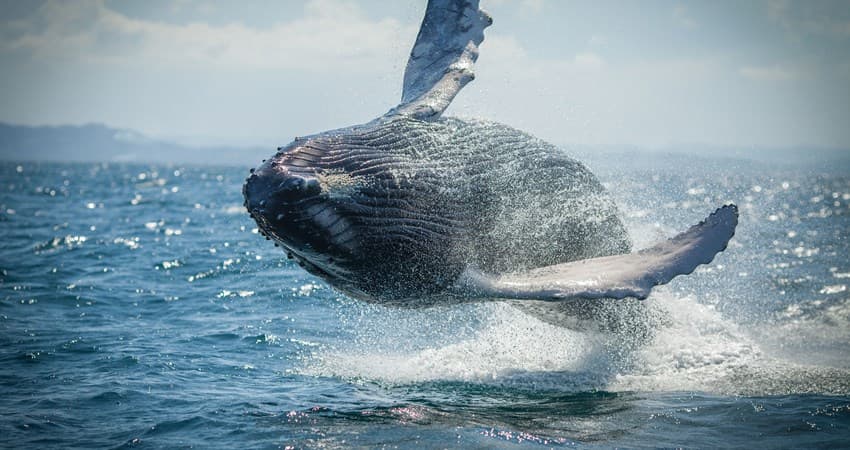
One of the most exciting moments is seeing a humpback whale breach completely or partially out of the water.
However, responsible guides should never promise that a whale will breach simply because a guest requests it.
The goal is to observe the animals while minimizing disturbance.
How Long Is a Whale Watching Tour?
A standard whale-watching excursion from Samaná generally lasts several hours, depending on the itinerary, weather, sea conditions and location of the whales.
Tours departing from Punta Cana take substantially longer because transportation to and from the Samaná region is included.
If you are booking a tour, always check whether the advertised duration includes:
- Hotel transportation
- Boat transportation
- Whale watching
- Lunch
- Additional attractions
This helps you compare tours correctly.
How Much Does Whale Watching Cost in the Dominican Republic?
Whale-watching prices vary depending on the departure location, transportation, boat type, itinerary and whether the excursion is shared or private.
A whale-watching excursion from Samaná is normally less expensive than a full-day excursion from Punta Cana because Punta Cana packages include long-distance transportation.
Private excursions are generally more expensive because the boat and guide are dedicated to your group.
Before booking, check exactly what is included.
A good whale-watching package should clearly explain:
- Transportation
- Boat excursion
- Guide
- Whale-watching or sanctuary fees
- Food and drinks
- Additional attractions
- Pickup location
- Return time
- Cancellation policy
Booking Adventures offers whale-watching experiences from several Dominican Republic locations, including Punta Cana, Samaná, Sabana de la Mar and other departure areas.
What Are the Whale Watching Rules in the Dominican Republic?
Whale watching in the Dominican Republic is regulated to protect the animals and improve the safety and quality of the experience.
The International Whaling Commission reports several important rules for Samaná Bay.
These include:
- No more than three boats observing a whale group at the same time.
- Waiting vessels must remain 250 meters from whales.
- Boats must maintain a minimum distance of 50 meters from adult whales.
- Boats must maintain a minimum distance of 80 meters from a group with a calf.
- A vessel may spend a maximum of 30 minutes with one whale group when other boats are waiting.
- Vessels must travel no faster than 5 knots, or approximately 9 km/h, within the sanctuary or when a whale is observed outside it.
- Boats must leave the sanctuary before 4:00 PM.
- Swimming with whales is prohibited in Samaná Bay.
- Boats must comply with safety and inspection requirements.
These regulations are an important part of responsible tourism.
Is Whale Watching in the Dominican Republic Safe?
Whale watching can be a safe and enjoyable activity when it is operated by properly authorized and safety-conscious providers.
The Dominican Ministry of Environment requires authorization for companies, individuals and tour operators using vessels for whale observation in the relevant marine sanctuary and Samaná Bay. Its service requirements include documentation such as vessel registration, a valid seaworthiness certificate, insurance and captain information.
The International Whaling Commission also notes that whale-watching vessels must undergo inspections involving the Dominican Navy and environmental authorities.
Before booking, look for a company that clearly explains its authorization, safety procedures and whale-watching practices.
Responsible Whale Watching
Responsible whale watching means enjoying the animals without trying to control their behavior.
A good tour should never:
- Chase whales
- Intentionally cut across their path
- Attempt to touch whales
- Encourage swimming with whales
- Approach mothers and calves too closely
- Ignore distance regulations
- Speed toward a whale group
- Throw waste into the ocean
The Dominican Republic has developed a management system involving government authorities, tourism institutions, boat operators and conservation organizations to regulate whale watching in Samaná Bay.
When travelers choose responsible operators, tourism can help support conservation, local communities and environmental education.
What Should You Bring Whale Watching?
For your Dominican Republic whale-watching excursion, consider bringing:
- Sunscreen
- Sunglasses
- Hat
- Light jacket or windbreaker
- Comfortable clothing
- Camera
- Extra phone battery or power bank
- Water
- Motion-sickness medication if you normally need it
- Binoculars if available
Even when the weather is warm on land, the wind on a boat can make the trip feel cooler.
If you are sensitive to motion sickness, tell your guide before departure and follow the advice of your healthcare professional regarding any medication.
Whale Watching with Children
Whale watching can be an incredible family experience.
Children may especially enjoy seeing:
- Whales surfacing
- Calves swimming with their mothers
- Breaching
- Tail slapping
- Other seabirds and marine wildlife
Parents should consider the length of the excursion, boat type, sea conditions and the child's tolerance for a long day on the water.
Always follow the boat's safety instructions and life-jacket requirements.
What Is the Best Whale Watching Tour in the Dominican Republic?
The best tour depends on where you are staying and what you want from the experience.
Best for travelers staying in Samaná
Choose a direct Samaná Bay whale-watching tour.
Best for Punta Cana visitors
Choose a Punta Cana to Samaná whale-watching day trip.
Best for private groups
Choose a private whale-watching excursion where the itinerary can be adapted to your group.
Best for nature lovers
Combine whale watching with another nature experience such as Cayo Levantado, beaches or a Samaná Peninsula excursion.
Best for travelers in the east
Consider departures or transportation options involving Miches, Sabana de la Mar or Las Cañitas, depending on the current authorized operation and itinerary.
Whale Watching and Cayo Levantado
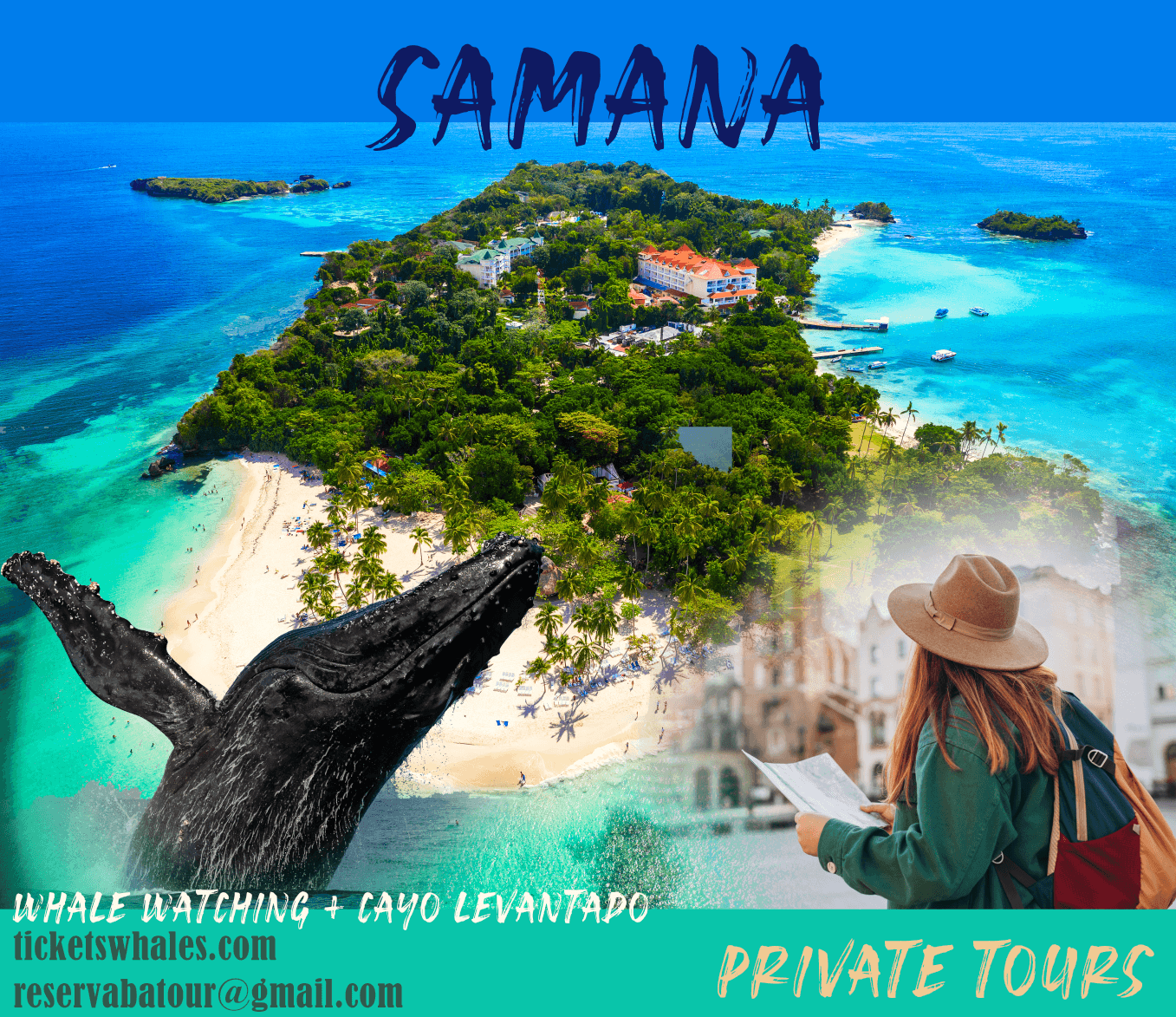
One popular way to make the experience more complete is to combine whale watching with Cayo Levantado.
The island is located in Samaná Bay and is famous for its tropical scenery and beaches.
A combination tour can allow travelers to experience:
- Humpback whales
- Samaná Bay
- Cayo Levantado
- Dominican food
- Boat transportation
- Caribbean scenery
For travelers coming from Punta Cana, this can be an especially attractive option because it combines several experiences into one full-day excursion.
2027 Whale Watching Season: What Travelers Should Know
The Dominican Republic is already preparing for the 2027 whale-watching season.
The Ministry of Environment announced that the process for environmental authorizations for whale-watching vessels opened in October 2026. Applications are scheduled to be received from October 16 through November 13, 2026.
The process covers operations associated with Samaná Bay, Las Galeras, Miches, Sabana de la Mar and Las Cañitas, as well as operations at Banco de la Plata.
This is important for travelers planning their 2027 vacation because whale watching is a regulated activity, not simply an informal boat trip.
For the latest 2027 requirements, travelers should verify that their chosen operator is authorized for the relevant season.
Why Choose Booking Adventures for Whale Watching?
Booking Adventures specializes in Dominican Republic nature and adventure experiences and offers whale-watching options for travelers visiting different parts of the country.
Our goal is to connect travelers with local experiences while providing clear information about transportation, schedules and what to expect.
Depending on the departure location and selected itinerary, whale-watching experiences can be available from:
- Punta Cana
- Samaná
- Sabana de la Mar
- Miches
- Other eastern Dominican Republic locations
We can help travelers choose an excursion based on their hotel location, travel dates, group size and preferred experience.
Book your Dominican Republic whale-watching adventure and experience humpback whales in Samaná Bay during the 2027 season.
Frequently Asked Questions About Whale Watching in the Dominican Republic
When is whale watching season in the Dominican Republic?
The main whale-watching season in the Dominican Republic is January through March, when humpback whales visit the Samaná region.
What is the best month for whale watching in the Dominican Republic?
February is an excellent month because it falls within the core winter whale season. January and March can also provide excellent opportunities.
Where is the best place to see whales in the Dominican Republic?
Samaná Bay is the country's best-known whale-watching destination and an established Caribbean whale-watching hub.
Can I go whale watching from Punta Cana?
Yes. Punta Cana travelers can take a full-day excursion to the Samaná region for whale watching. The actual whale-watching experience takes place around Samaná rather than directly off Punta Cana's beaches.
Can you see whales from Samaná?
Yes. Samaná is one of the principal departure points for whale-watching excursions in Samaná Bay.
What whales can you see in Samaná?
The main species observed during the seasonal whale-watching period is the humpback whale.
Are whale sightings guaranteed?
No wildlife sighting can honestly be guaranteed. Humpback whales are wild animals and their behavior and location change naturally.
How close can boats get to whales?
The rules reported by the International Whaling Commission require vessels to maintain at least 50 meters from adult whales and 80 meters from groups with a calf.
Can you swim with whales in Samaná?
No. Swimming with whales is prohibited in Samaná Bay.
Is whale watching ethical?
It can be when conducted responsibly and under the Dominican Republic's environmental regulations. Choose an authorized operator that follows approach distances, speed limits and other sanctuary rules.
How long is a whale-watching excursion?
The boat portion varies by departure point and itinerary. Tours from Samaná are generally several hours, while Punta Cana excursions can take most of the day because they include transportation to and from the Samaná region.
What should I bring whale watching?
Bring sunscreen, sunglasses, a hat, comfortable clothing, a light jacket or windbreaker, a camera and any motion-sickness supplies you normally use.
Is February a good time to see whales in Samaná?
Yes. February falls within the main January–March humpback whale season and is an excellent time to plan a whale-watching trip.
Is whale watching available in December?
December is outside the main Samaná humpback whale-watching season. For the traditional Dominican Republic whale-watching experience, plan your trip between January and March.
Plan Your 2027 Whale Watching Adventure
Seeing humpback whales in the Dominican Republic is more than a boat excursion. It is an opportunity to experience one of the Caribbean's most remarkable seasonal wildlife events while supporting responsible nature tourism.
For the best chance of enjoying the experience, plan your trip during the January–March whale season, choose a properly authorized operator, follow the sanctuary rules and allow the whales to behave naturally.
Whether you are staying in Punta Cana, Samaná, Las Terrenas, Las Galeras, Miches or Sabana de la Mar, Booking Adventures can help you find the right whale-watching experience for your Dominican Republic vacation.
Ready to see humpback whales in Samaná Bay?
Book your 2027 Dominican Republic whale-watching adventure with Booking Adventures.
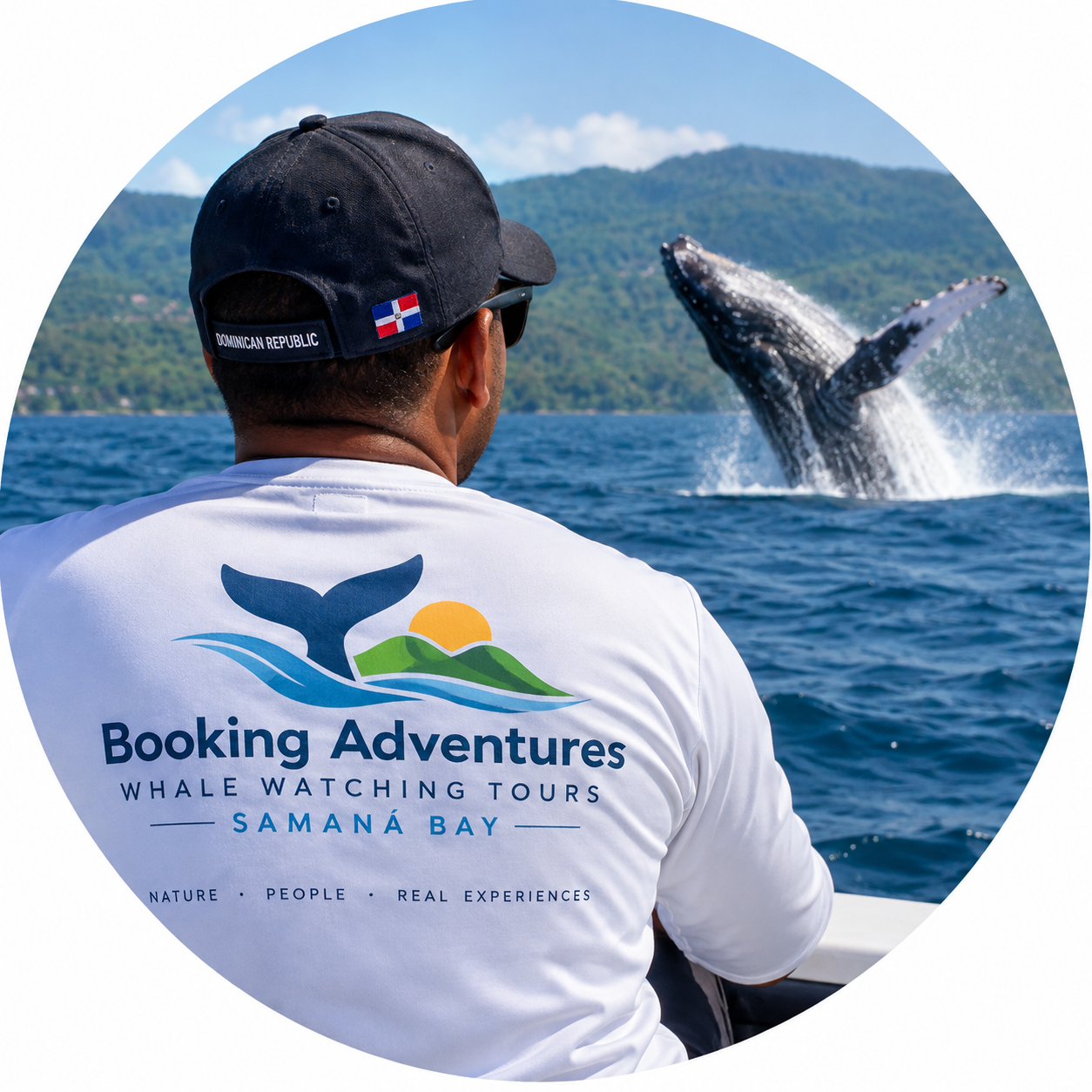
Local explorer & expert guide in Whale Watching Punta Cana.